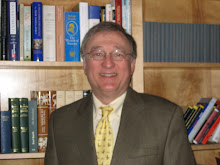
Anna Schwartz died yesterday in Manhattan at the age of 96. She is best known for her collaboration with Milton Friedman, A Monetary History of the United States, 1867-1960. The book changed the way people regarded the Great Depression because it showed how far the money supply fell from 1929 to 1933. Monetary policy went from a neglected tool by Keynesians to the dominant tool in economic policy. Her obituary is here.
Randall Parker has an interesting book, Reflections on the Great Depression, in which he interviewed a number of famous economists who lived through the depression. Anna Schwartz was one of the economists in the book. Friedman's interview is also in the book.
Friday, June 22, 2012

Wednesday, June 20, 2012
On Five Keys to Restoring America's Prosperity
I finished reading John Taylor's First Principles: Five Keys to Restoring America's Prosperity and enjoyed it very much. It is very good in its analysis and policy recommendations. The five key principles he lists are: predictable policy framework, rule of law, strong incentives, reliance on markets, and a clearly limited role for government. In other words, a focus on economic freedom as much as possible. They are fairly similar to the "modest proposal" I offered in one of my lectures at Acton University. The suggestions I made included: observe federalism, let the government do what the private sector cannot, let taxes be collected to cover expenditures (making some allowance for expenditures that are truly investments), let the Fed apply a monetary rule, and let the goverment create an environment in which entrepreneur's can flourish. The latter would certainly include strong incentives and predictable policy framework.
Taylor argues that, "If people are forward-looking and adjust their behavior to new circumstances, then economic policy works best when formulated as a rule. Government's adherence to known rules allows people to have a clearer sense of what is coming, and therefore to make informed decisions about long-range plans." To me, this is the most important statement Taylor makes in his book. It offers in a nutshell an argument for rules and against constant discretiionary behavior trying to fine-tune the economy.
Taylor offers support for his claims. He argues that when policymakers support economic freedom, they rely on automatic stabilizers rather than Keynesan discretionary interventions, the Fed applies rules, and regulatory policy enforce known rules rather than deviate from them to help certain people.
Taylor looks at the post-war history of the U.S. to illustrate his arguments. From the 1950s ot the late 1970s, the federal government and the Fed tended to be interventionist. Keynesianism was the official doctrine employed in the government and monetary policy tended to waver in light of current economic conditions. Then, Paul Volker led the Fed to concentrate on price stability, arguing that unemployment wouldn't fall until stable prices were achieved. The election of Ronald Reagan brought a less interventionist approach for the executive branch as well. This approach lasted through the Clinton years, but President George W. Bush pusured more interventionist policies, and the Fed began to deviate from the rules-oriented approach it had followed. Today, interventionism abounds.
Taylor then provides chapters on how to get out of the mess we currently have. One is on debt, another on monetary rules, a third on ending crony capitalism, a fourth on entitlements, and a final on rebuilding American economic leadership.
All-in-all, I found the book thoughtful and helpful. It is worth taking a look at.
Taylor argues that, "If people are forward-looking and adjust their behavior to new circumstances, then economic policy works best when formulated as a rule. Government's adherence to known rules allows people to have a clearer sense of what is coming, and therefore to make informed decisions about long-range plans." To me, this is the most important statement Taylor makes in his book. It offers in a nutshell an argument for rules and against constant discretiionary behavior trying to fine-tune the economy.
Taylor offers support for his claims. He argues that when policymakers support economic freedom, they rely on automatic stabilizers rather than Keynesan discretionary interventions, the Fed applies rules, and regulatory policy enforce known rules rather than deviate from them to help certain people.
Taylor looks at the post-war history of the U.S. to illustrate his arguments. From the 1950s ot the late 1970s, the federal government and the Fed tended to be interventionist. Keynesianism was the official doctrine employed in the government and monetary policy tended to waver in light of current economic conditions. Then, Paul Volker led the Fed to concentrate on price stability, arguing that unemployment wouldn't fall until stable prices were achieved. The election of Ronald Reagan brought a less interventionist approach for the executive branch as well. This approach lasted through the Clinton years, but President George W. Bush pusured more interventionist policies, and the Fed began to deviate from the rules-oriented approach it had followed. Today, interventionism abounds.
Taylor then provides chapters on how to get out of the mess we currently have. One is on debt, another on monetary rules, a third on ending crony capitalism, a fourth on entitlements, and a final on rebuilding American economic leadership.
All-in-all, I found the book thoughtful and helpful. It is worth taking a look at.
Saturday, June 16, 2012
On Acton University
I spent the last several days in Grand Rapids attending Acton University--a program for people who want to know more about market economies, liberty, and theology. I gave two lectures--one on theologians vs. capitalism and another on basic macroeconomics. I also attended some lectures, including one on John Ryan and the New Deal and another on fair trade. The latter was presented by my former colleague, Victor Claar. He has an excellent monograph on the subject entitled, Fair Trade? It's Prospects as a Poverty Solution. I highly recommend the monograph.
Wednesday, June 13, 2012
On Europe, Again!
Europe remains the focus of much of the business news. In the NY Times, German economist Hans-Werner Sinn offers an op-ed on why Berline is balking at a bailout. His basic argument is that the kind of risk-sharing demanded by some pundits and politicians is only possible if the euro-zone were actually a nation with a contitution and a common legal superstructure. Meanwhile, Gerald O'Driscoll opines in the WSJ that the euro will fail. He cites Milton Friedman who predicted the euro would fail within ten years. It has lasted longer than that, but O'Driscoll thinks failure is almost certain. He concludes his column with the idea that the EU should have adopted political union before creating the euro and not the other way around. Another column offers support for Merkel's approach, arguing the lack of leadership is in the debtor nations. The lead article in the WSJ is on the spreading threat in Europe over the euro crisis. Another article focuses on Italy.
O'Driscoll referred to the time as a crisis, meaning the original idea of the Greek work that underlies the English word--a turning point. Either the currency will fail or it will recover by the euro-zone adopting more fiscal and political integration. While O'Driscoll thinks it will fail, I still think there is a good chance the greater political integration will occur.
O'Driscoll referred to the time as a crisis, meaning the original idea of the Greek work that underlies the English word--a turning point. Either the currency will fail or it will recover by the euro-zone adopting more fiscal and political integration. While O'Driscoll thinks it will fail, I still think there is a good chance the greater political integration will occur.
Tuesday, June 12, 2012
In Defense of Germany
Gideon Rachman's op-ed piece in today's Financial Times offers support for Germany's approach to the euro crisis. He cites the newest Economist, in which it is argued that an international consensus on what Angela Merkel should do--shift from austerity, develop a banking union with euro-wide deposit insurance, and a type of debt mutualization (like euro bonds). President Obama is among the world leaders pushing Germany to do something.
But Rachman argues otherwise. He thinks the demands are politically dangerous as well as unrealistic. Take a Europe-wide bank deposit system like the FDIC in the U.S. Rachman quotes a senior Dutch politician, "'We cannot push through a banking union when the French have just cut thier retirement age to 60 and we have raised ours to 67.'"
I have argued numerous times that the euro was a political decision, designed to force more political integration in the EU. But, as Rachman notes, the necessary integration cannot happen that quickly. Among things needed would be to have a European government that could override the current national governments. They would need to harmonize the various European social security systems.
Rachman also claims that Merkel has had a political success that is little noted as yet. She has been able to keep the far-right and far-left parites on the sidelines. Meanwhile, in the last French election one-third of the voters supported either a far left or a far right party. Currently, the extremist parties are leading in the polls in the Netherlands. The political center is holding in Germany and this is no small accomplishment.
But Rachman argues otherwise. He thinks the demands are politically dangerous as well as unrealistic. Take a Europe-wide bank deposit system like the FDIC in the U.S. Rachman quotes a senior Dutch politician, "'We cannot push through a banking union when the French have just cut thier retirement age to 60 and we have raised ours to 67.'"
I have argued numerous times that the euro was a political decision, designed to force more political integration in the EU. But, as Rachman notes, the necessary integration cannot happen that quickly. Among things needed would be to have a European government that could override the current national governments. They would need to harmonize the various European social security systems.
Rachman also claims that Merkel has had a political success that is little noted as yet. She has been able to keep the far-right and far-left parites on the sidelines. Meanwhile, in the last French election one-third of the voters supported either a far left or a far right party. Currently, the extremist parties are leading in the polls in the Netherlands. The political center is holding in Germany and this is no small accomplishment.
Saturday, June 9, 2012
Is Berlin Worrying Too Much About the Wrong Historical Period?
There is an interesting op-ed in the Financial Times by Niall Ferguson and Nouriel Roubini. They point out that Europe has dithered over recapitalizing their banks, often relying on sovereign debt to do so. Of course, the sovereign debt is part of the problem now. They also argue that Germany is key but Germany is focusing too much on the hyperinflation after WW I and not enough on 1933. They offer some solutions that could be worked, and note that the monetary union always implied further fiscal and political integration, a point I have often made.
They conclude with:
Ultimately, as Angela Merkel, the German chancellor, herself acknowledged last week, monetary union always implied further integration into a fiscal and political union. But before Europe gets anywhere near taking this historical step, it must first of all show it has learnt the lessons of the past. The EU was created to avoid repeating the disasters of the 1930s. It is time Europe’s leaders – and especially Germany’s – understood how perilously close they are to doing just that.
They conclude with:
Ultimately, as Angela Merkel, the German chancellor, herself acknowledged last week, monetary union always implied further integration into a fiscal and political union. But before Europe gets anywhere near taking this historical step, it must first of all show it has learnt the lessons of the past. The EU was created to avoid repeating the disasters of the 1930s. It is time Europe’s leaders – and especially Germany’s – understood how perilously close they are to doing just that.
Friday, June 8, 2012
Corruption in Europe and India
While on sabbatical at the University of Göttingen, I met Johan Graf Lambsdorf, whose reserach was on corruption across nations. He has been involved in compiling a Corruption Perceptions Index as part of Transparency International. This organization just came out with a report on corruption in Europe. Italy, Greece, Spain, and Portugal fared much worse than most of the other members of the euro zone. The problems they are having today may not be directly related to corrpution, but I don't think it is a coincedence either. Corruption reduces economic growth and efficiency. It discourages entrepreneurship. It can increase government spending without providing benefits. Honest government is one of the institutions needed for economic growth.
Corruption is cited in an article about India in today's NY Times as well. Food often rots while the poor go hungry. India provides subsidies to farmers to encourage more food production and sells food to the poor at prices lower than the would pay in stores. But, corruption leads to much of the food being diverted. Some poor cannot get ration cards--a bribe may be needed.
The harm to people caused by corruption is real and significant.
Corruption is cited in an article about India in today's NY Times as well. Food often rots while the poor go hungry. India provides subsidies to farmers to encourage more food production and sells food to the poor at prices lower than the would pay in stores. But, corruption leads to much of the food being diverted. Some poor cannot get ration cards--a bribe may be needed.
The harm to people caused by corruption is real and significant.
Subscribe to:
Posts (Atom)